
At Beyond Vision Center (BVC), we believe that your child’s vision is more than the ability to see; it’s a foundation for comprehensive development and an engaged life. From infancy to adolescence, vision supports many milestones of an individual: recognizing faces, seeing things in 3D, exploring the world, and acquiring new skills. However, vision problems among children often go unnoticed, since many young kids may not realize the problem or struggle to express what they’re feeling. That’s why it is important that parents understand the signs of early childhood vision issues and how regular eye care can make a world of difference to a child’s visual health and overall well-being.
Eye disorders are far from rare among children. According to the American Optometric Association, about 10% of preschoolers experience some form of vision problem. Refractive errors, which include nearsightedness, farsightedness, crossed eyes, and amblyopia, affect nearly 1 out of every 5 children in America. With the prevalence of preschool vision issues, approximately 1 in 17 preschool-aged children and 1 in 4 school-aged children require some form of vision treatment during their development. Early eye examinations allow doctors to detect potential issues and to intervene before more serious complications, such as vision loss.
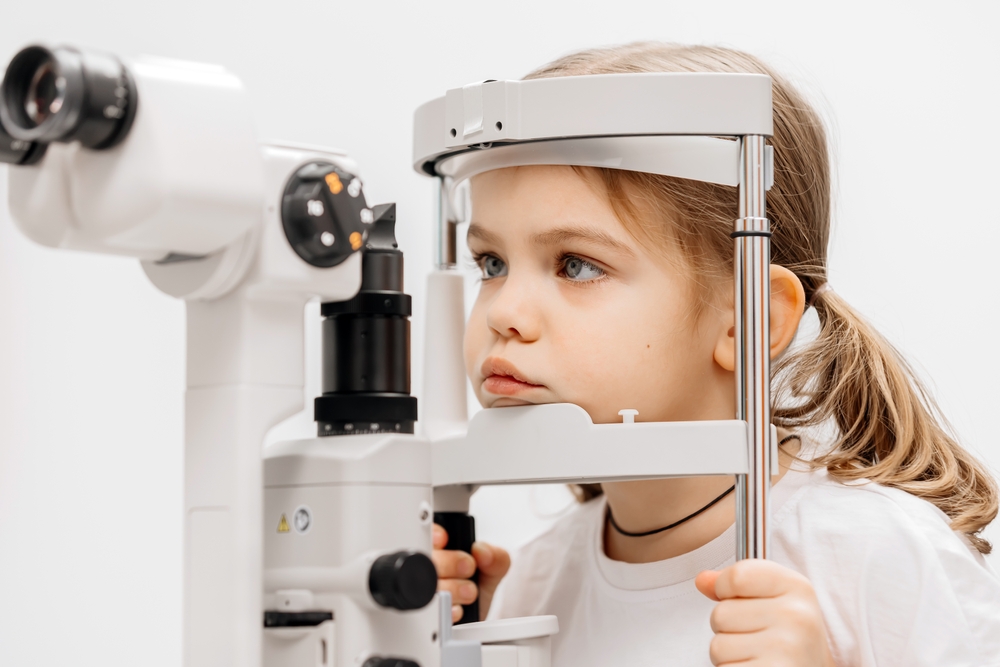
Eye-related problems happen when the eye’s shape prevents light from focusing on the retina, resulting in blurred or distorted vision. This condition can be manifested in different ways. Myopia, or nearsightedness, refers to the difficulty in seeing distant objects. On the other hand, hyperopia, also known as farsightedness, happens when a child struggles to see close objects easily. Astigmatism is a combination of shortsightedness and farsightedness, making it difficult for individuals to see both close and far objects. Parents can easily notice the signs of these eye conditions in their kids, for example: squinting, holding books or phones very near, or tilting their head to one side. Sometimes, kids may also complain of frequent headaches or eye strain due to overworked visual focus.
Amblyopia, commonly referred to as lazy eye, occurs when one eye becomes weaker than the other due to poor coordination between the brain and the eye. Kids with this eye problem may not show clear symptoms, but some may close one eye when focusing, have trouble catching or throwing objects, or develop droopy eyelids. If you spot these signs in your child, don’t hesitate to schedule a comprehensive eye exam with us for early diagnosis and treatment.
4 out of 100 children suffer from strabismus (crossed eyes), which makes their eyes not look in the same direction at the same time. Children with strabismus are more likely to develop a lazy eye, as the brain tries to ignore the input from one eye to prevent double vision. You may notice a child with strabismus tilting their head frequently, closing one eye in bright light, or having trouble with tasks that require coordination.
Regardless of the specific conditions, parents should be aware of the common behaviors indicating eye problems among children. These include excessive eye rubbing, avoiding tasks that require close vision, poor hand-eye coordination, or head-tilting. Some minors can express frustration or low attention span, not because of a lack of interest, but due to the child’s inability to see clearly.
At BVC, our experienced team is dedicated to pediatric vision. We provide first-step vision screening and comprehensive pediatric eye tests to identify potential problems and guide you towards the appropriate care for your kids. Whether your child needs prescription contacts, vision therapy, or referral to a specialist for advanced treatment, we are here to guide you through every step.
Undiagnosed problems can severely interfere with vision development, the learning process, confidence, and the overall well-being of children. Blurry vision or difficulty focusing on moving objects makes it hard for children to keep up in class, hindering them from learning new things at school. When the coordination between a child’s eyes and hands is weak, it can make physical activities harder to enjoy or keep up with. Over time, these struggles can impact not only physical development but also a child’s self-esteem and social confidence.

Many parents might think their kids need to be able to read the alphabet to have their eyes examined. However, this assumption is far from the doctor’s recommendation. As early as 6 months old, you should take your baby to their first infant vision examination. Optometrists will assess eye health, including eye alignment and movement, as well as any signs of refractive errors. Children should also have their vision checked thoroughly between the ages of 3 and 5 to make sure their vision is developing properly. Treatment at these key growing phases will allow doctors to correct vision problems more easily and less invasively.
Many pediatric vision problems have genetic components. Inherited retina disorders and glaucoma are caused by inherited gene mutations. Other eye-related issues, like nearsightedness or farsightedness, can be attributed to both genetics and environmental factors. If there’s a family history of eye conditions like amblyopia, strabismus, or early need for eyeglasses, your child may be at higher risk. Sharing this information with your eye doctor allows for earlier screenings and personalized care.
Treatment for these problems depends on what issue your child has. Refractive errors are typically corrected with prescription glasses, which can significantly improve a child’s ability to see and focus. Lazy eyes may be treated using patching therapy or special eye drops that can temporarily blur near vision, which forces the brain to use the weaker eye. Vision therapy is another typical treatment in which a series of visual activities is prescribed to encourage the brain and eyes to work together more effectively. In other cases, surgical correction may be needed, especially for strabismus.
At BVC, we offer specialized treatment for a variety of pediatric vision issues. To properly diagnose the problem, our team begins with a comprehensive eye examination. Depending on each case, treatment may include glasses, vision therapy, or referral to a specialized pediatric ophthalmologist. We work closely with families to build treatment plans that best fit each child’s development and lifestyle.
Parents play an important role in fostering a child’s visual health by encouraging good habits, recognizing potential problems, and seeking timely eye care. Simple daily routines, including promoting more outdoor activities, limiting screen time, and eating a more vitamin A-rich diet, can go a long way in supporting eye health. Regular eye exams, good lighting at home, and being attentive to changes in your minor’s behavior can all contribute to early detection and intervention. Throughout a child’s treatment, the support from parents matters. From helping your kid put in contacts, attending follow-up appointments, or accompanying them during patching therapy, it’s important that they feel supported and confident about their journey.
At BVC, pediatric vision care isn’t just a service; it’s at the heart of what we do. We understand how deeply parents care about their children’s well-being, and we would be honored to be a part of your child’s healthy development. Whether it’s your kid’s first vision test or ongoing treatment, we’re dedicated to making the experience thorough, personalized, and comprehensive.
If you think your kid may be showing signs of a vision problem, or if it’s simply time for a routine checkup, don’t hesitate to book a visit with us online or via 760-438-2020 (Carlsbad) and 760-944-7177 (Encinitas)!